A Tradition Forged in Fire
Custom Masonry Wood-Fired Ovens, Built by Hand in Eastern Ontario.
Inspired by ancient Pompeii, our masonry ovens bring a lasting tradition of fire, craft, and unforgettable meals to your home or lakeside retreat across Eastern Ontario.
From $18,800 · Ottawa, Kingston, Prince Edward County and the Valley
One fire. Two days of cooking.
Once heated, make pizza, bagels, bread, roasts.
- Saturday, 5pmpast 900°F on the floor
Pizza in ninety seconds. A natural gathering place.
- Saturday, 8pm700°F
Lamb. A whole fish. Peppers blackening in the corner.
- Sunday, 7am500°F
Two dozen bagels in one bake. You won't bake it better anywhere else.
- Sunday, noon400°F
A roast. Potatoes. A tray of gratin.
- Sunday, evening300°F
Beans, stock, something left in overnight.
Still significantly hot twelve hours after the fire goes out.
The dome isn't round.
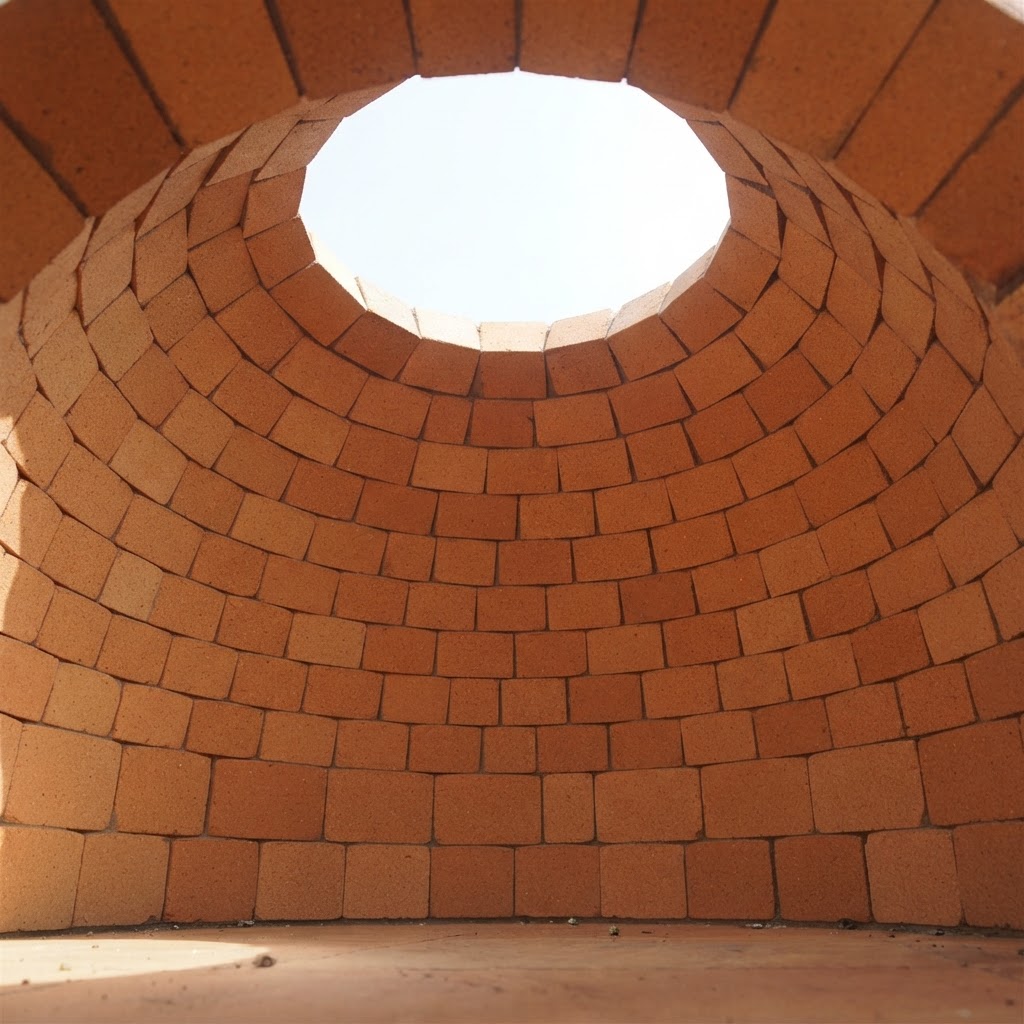
Most people assume a Pompeii dome is a half-sphere. It shouldn't be. Measure a good one and the radius across the floor is greater than the height at the centre — the dome is deliberately flattened.
The reason is the floor. Almost all the heat that cooks the underside of a pizza has come down off the ceiling and gone into the brick beneath it. Build the dome too tall and that heat has too far to travel. The chamber runs hot, the top of the pizza chars, and the base comes out pale.
So the courses are stepped in progressively as they rise, pulling the ceiling closer to the floor than a true hemisphere would sit. It takes longer to lay. It is the difference between a pizza that is cooked and a pizza that is burnt on top and raw underneath.
Build Your Oven
The Gathering
from $18,800The round dome. Pompeii's shape, unchanged.
34 inches across, 908 square inches of cooking floor. Three pizzas at once, or two dozen bagels in a single bake. Hand-laid firebrick, cast iron door, foundation and base built below the frost line.
The Baker
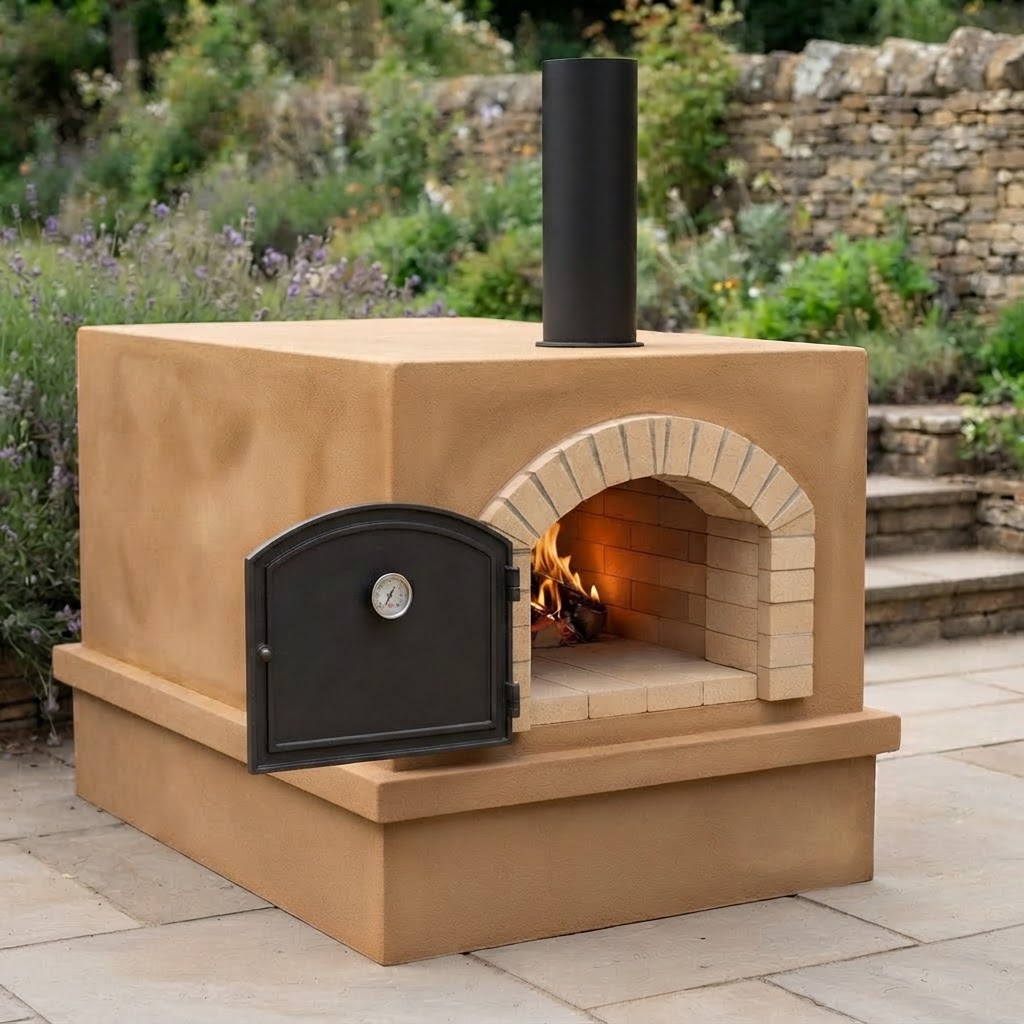
from $21,330The flat hearth. For people who bake.
42 × 42 inch interior, 1,764 square inches of cooking floor. Five pizzas at once. Square chamber, flat floor, fitted cast iron door with gauge. Built to hold the long steady middle of the fire.
No two ovens we build are the same. Change the size, the door, the flue, the finish — or start from nothing.
Why it holds heat
Four layers, nine and a half inches.
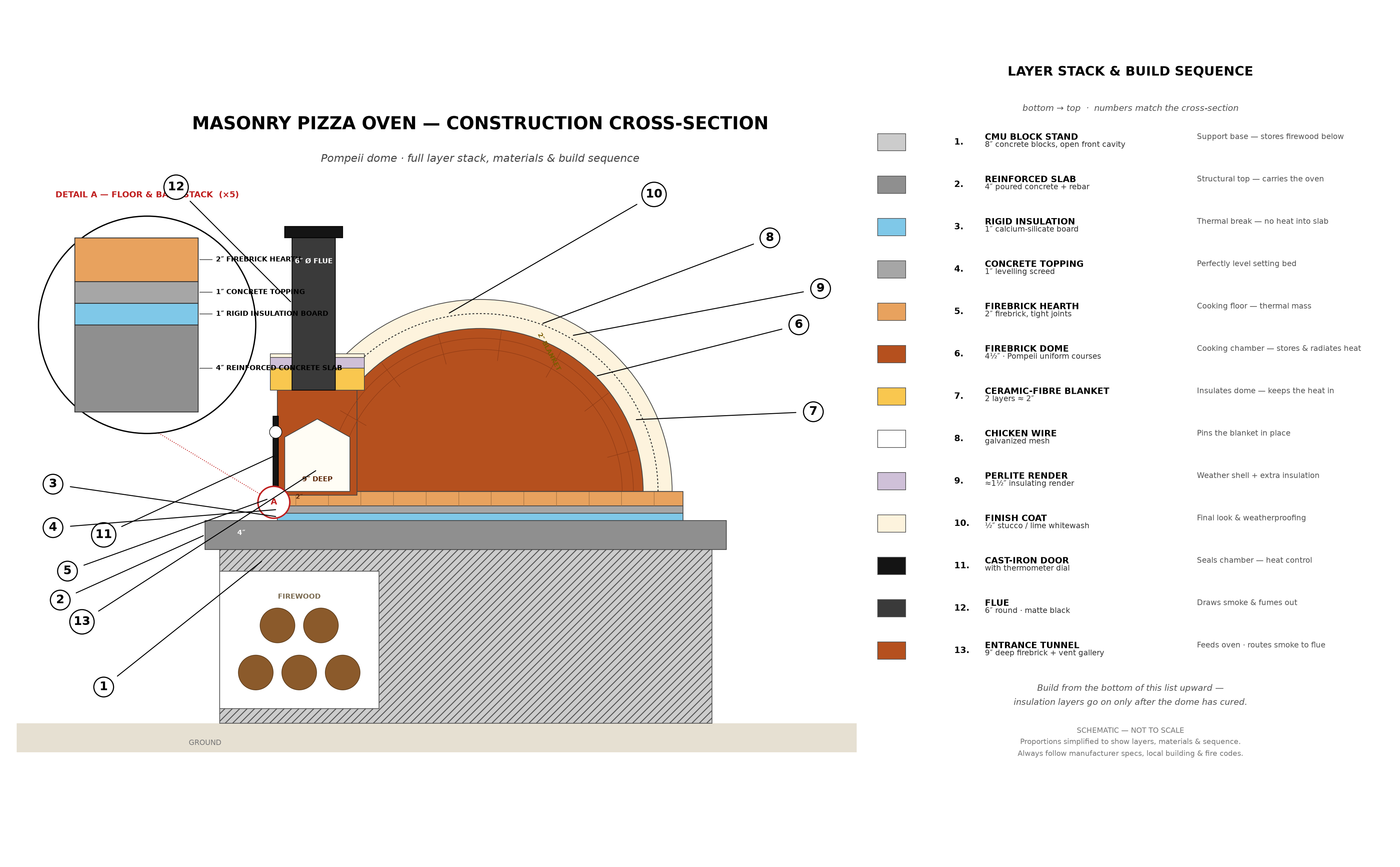
Four and a half inches of hand-laid firebrick. Three inches of ceramic fibre blanket. An inch and a half of perlite render. Then the finish. Kit ovens are cast at about two inches, total.
Even heat, not hot spots.
The cheaper portable ovens scorch one side of a pizza before the other is ready. Heat radiates off the whole curve of a hand-laid dome, so the pizza cooks evenly from above while the floor cooks it from below.
Below the frost line.
Eastern Ontario frost runs deep. Every base we build bears beneath it. Nothing heaves, nothing cracks, nothing shifts.
Room to cook something other than pizza.
A Gozney Dome — the best of the countertop ovens — publishes 398 square inches of floor. One sixteen-inch pizza, or two tens.
The Gathering gives you 908. The Baker, 1,764 — four and a half times the floor.
Three pizzas at once, if you want them. But pizza isn't where the room counts. Two dozen bagels in a single bake, or a shoulder of lamb with the potatoes beside it and a tray of peppers in the back corner.
That isn't a criticism of a countertop oven. It's a countertop oven, and it does what it does well. But you cannot bake a week's bread in one. The difference isn't temperature, but how much space you have.
Ask which surface they measured.
You will see 950°F quoted for countertop ovens. It is worth asking where that reading was taken.
Published oven temperatures are usually air or dome readings. The number that bakes the underside of your bread is the floor — and floor temperature is a function of mass. How much heat the brick beneath the dough is holding, and how quickly it gives that heat back when something cold is set on it.
A fully fired Firefly runs past 900°F measured on the floor, and stays significantly hot for more than twelve hours. The second number is the one that matters. A thin stone floor drops after every bake and has to climb back. Nine and a half inches of brick and insulation does not notice.
How it's built
Every oven starts as a hand-laid firebrick dome, mortared course by course to a curve. Then blanket, then render, then a week of slow fires to drive the water out.
The full build, layer by layer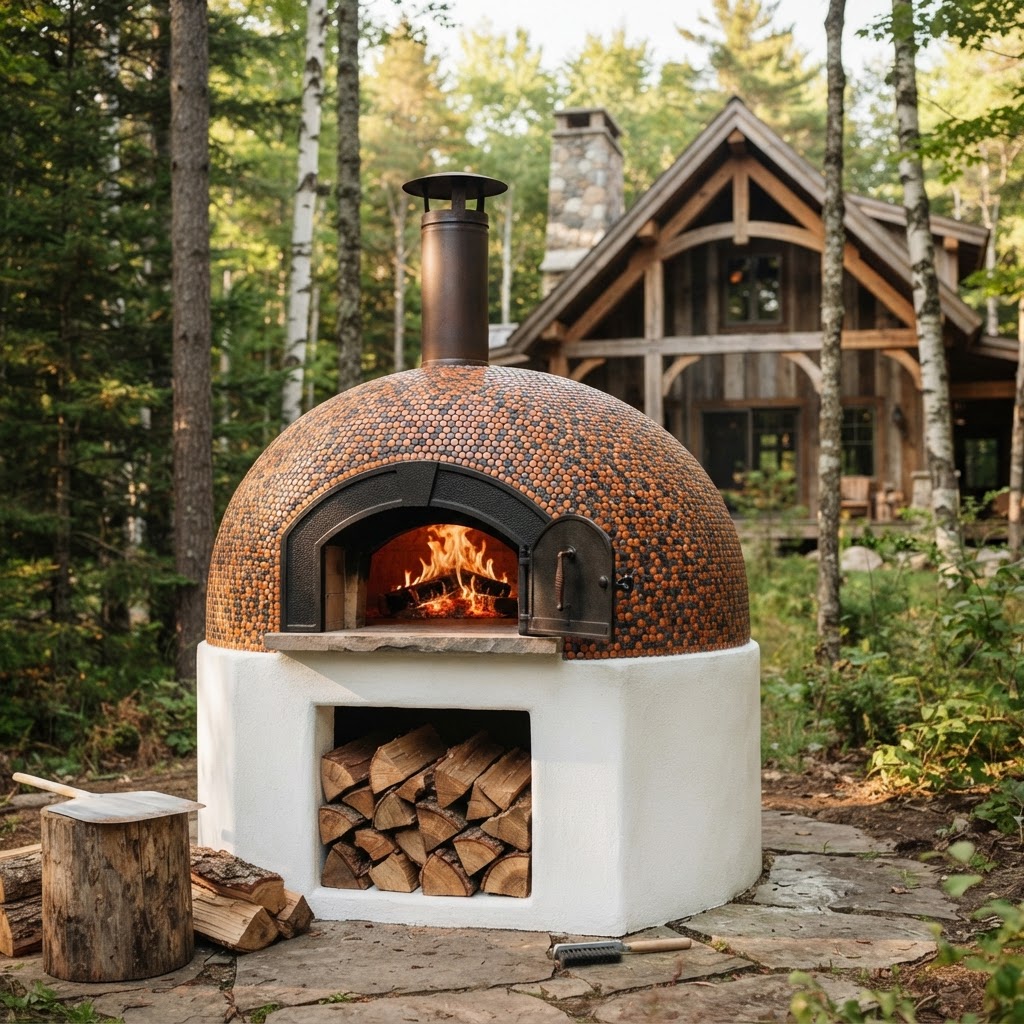
An oven isn't delivered. It's built.
An Heirloom with a lifespan measured in decades. It is still here when the deck is replaced and the kitchen is redone. Cure it properly the first week and it will still be here in a hundred years.
Come and stand where it would go.
The site visit is free and it is the only honest way to price a build. We look at access, ground, clearances and where the smoke will go. You leave with a firm number.